Jesus answered and said unto her, Whosoever drinketh of this water shall thirst again: But whosoever drinketh of the water that I shall give him shall never thirst; but the water that I shall give him shall be in him a well of water
springing up into everlasting life. John 4:13-14
springing up into everlasting life. John 4:13-14
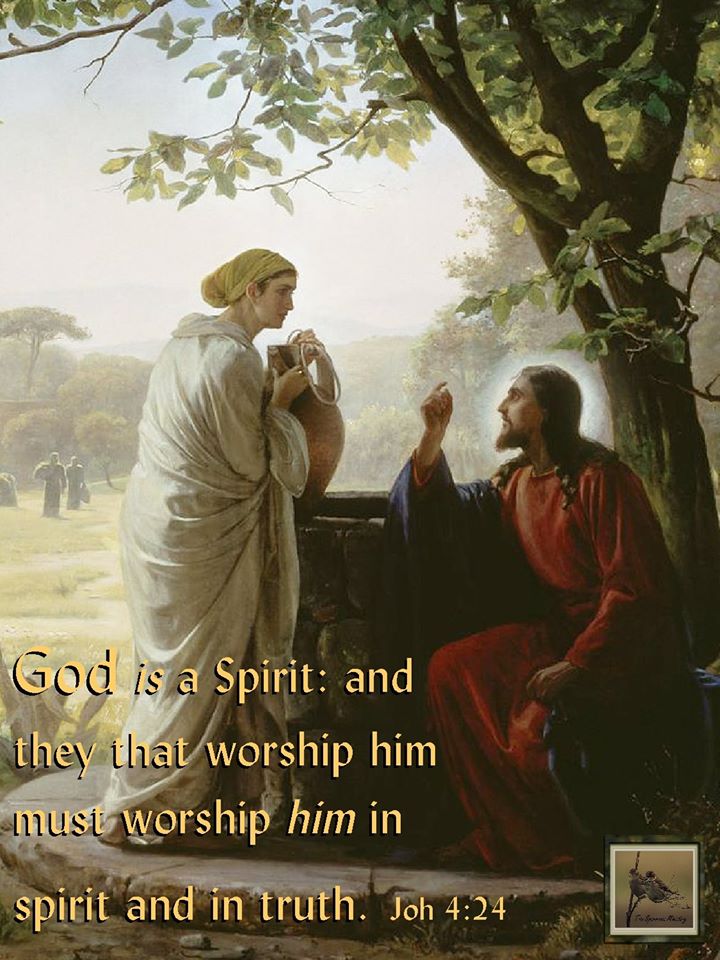
ONE MORNING, when the land was carpeted with flowers of spring, a woman awoke in the little town of Sychar that lay in the lap of the twin mountains, Ebal and Gerizim. She little realized that that day would revolutionize, not her own life only, but that of untold thousands. Throughout its happenings her story would be embalmed in the history of the race, and she would take the first step which, as tradition says, ended in martyrdom.
Her nature was passionate and intense. The well was deep! She had sought to satisfy her heart with human love, but in vain, and she had ceased to believe in love. Her character was gone, and her neighbours would not tolerate her presence at the ancient well, so that she had no alternative but to carry her pitcher hither in the sultry noon, instead of in the cool of the late afternoon, when the women came to draw their water.
She was not destitute of religion. There was the ancient tradition of Jacob's faith, for he had lived within sight of these hills and had drunk of that well. She believed in this ancestral religion, which had existed in its sublime simplicity before the division arose between Jew and Samaritan, and had listened to many discussions as to the rival claims of the temples at Jerusalem and Gerizim. She also believed that some day the long-looked for Messiah would appear, and explain all things. In the meanwhile, however, she was sick and weary at heart. Her daily lonely visit to the well seemed to epitomize her inner experience. "Give me, Stranger," she seemed to say, "anything that will appease this soul-thirst, and restore to me the years that the locust and cankerworm have eaten. Then I shall cease to thirst and come all the way hither to draw!"
Is she not the type of myriads? Some among my readers have drunk of all the wells sunk by human hands, and have found them brackish or empty. They have turned from them all with the ancient verdict: "Vanity of vanities, all is vanity." Is it thus with you, my friend? Then, it may be, that He who came far out of His usual way to find and help this distraught soul, is near to you also, waiting to open those hidden springs of which, if a man drink, he shall never thirst again. (Our Daily Walk)
Her nature was passionate and intense. The well was deep! She had sought to satisfy her heart with human love, but in vain, and she had ceased to believe in love. Her character was gone, and her neighbours would not tolerate her presence at the ancient well, so that she had no alternative but to carry her pitcher hither in the sultry noon, instead of in the cool of the late afternoon, when the women came to draw their water.
She was not destitute of religion. There was the ancient tradition of Jacob's faith, for he had lived within sight of these hills and had drunk of that well. She believed in this ancestral religion, which had existed in its sublime simplicity before the division arose between Jew and Samaritan, and had listened to many discussions as to the rival claims of the temples at Jerusalem and Gerizim. She also believed that some day the long-looked for Messiah would appear, and explain all things. In the meanwhile, however, she was sick and weary at heart. Her daily lonely visit to the well seemed to epitomize her inner experience. "Give me, Stranger," she seemed to say, "anything that will appease this soul-thirst, and restore to me the years that the locust and cankerworm have eaten. Then I shall cease to thirst and come all the way hither to draw!"
Is she not the type of myriads? Some among my readers have drunk of all the wells sunk by human hands, and have found them brackish or empty. They have turned from them all with the ancient verdict: "Vanity of vanities, all is vanity." Is it thus with you, my friend? Then, it may be, that He who came far out of His usual way to find and help this distraught soul, is near to you also, waiting to open those hidden springs of which, if a man drink, he shall never thirst again. (Our Daily Walk)
SATISFYING AN ETERNAL THIRST
Our Lord had no wish to precipitate the conflict with the Pharisee party, until He had finished His ministry to the people. He was the last and greatest of the prophets, as well as the world’s Redeemer. He therefore withdrew from the metropolis. Here is another must, Joh_4:4. There were three in the previous chapter and there are two in this. It was not necessary for Jesus to go through Samaria except for the purpose of mercy to one soul. Jacob’s well is still visible, at the entrance of the green valley up which Sychar lay. Thus, that is, as a tired man would sit. It was noon. The time when women usually drew water was in the evening, but there were special reasons why this woman came by herself. The love of God overleaps narrow restrictions of sex, and sect, and nationality. Two conditions, Joh_4:10, precede our reception of God’s best gifts: we must know, and we must ask.
The living water is not a stagnant pond or well, but leaps up from a hidden spring. The woman keeps referring to the well, Jesus to the spring in the well. That alone can satisfy. Not the word, but the spirit in the word. Not the rite, but the grace it symbolizes. Joh_4:13 might serve as the inscription on all places of worldly amusement. Ponder that word become, Joh_4:14. You first drink for your own need, then you help to meet the need of others.
(F.B. Meyer)
The living water is not a stagnant pond or well, but leaps up from a hidden spring. The woman keeps referring to the well, Jesus to the spring in the well. That alone can satisfy. Not the word, but the spirit in the word. Not the rite, but the grace it symbolizes. Joh_4:13 might serve as the inscription on all places of worldly amusement. Ponder that word become, Joh_4:14. You first drink for your own need, then you help to meet the need of others.
(F.B. Meyer)
 |  |